Ecology in Park Wood
For a small wood in an urban area Park Wood provides a surprising range of habitats and opportunities for wildlife. The wood is very typical of woodlands in South Hampshire being a mixture of large standard trees with an understory of smaller trees, many of which are multi-stemmed from being coppiced (cut to just above ground level) over many years.
Historically the standards were grown to provide beams used in timber frame buildings and sailing ships. The coppice trees were cut every few years to provide timber for everyday needs, like firewood.
Park Wood appears on maps going back some centuries. Once part of the Forest of Bere, a royal hunting forest, the name Park Wood would suggest that it was once part of a medieval deer park.
Ecology
Park Wood is best described as ancient semi natural woodland. Ancient because it contains plant species that take time to colonise new ground and typically grow in woods that have existed for centuries. Ancient woods are woodlands dating back to the earliest estate records known which are from the Tudor period and it can be assumed if a wood was recorded in the 16th century before the acts of enclosure, then most likely it existed in the medieval or earlier times. The term semi-natural is used to describe most of our UK woods because they have been managed by humans for to provide timber and other woodland products like charcoal or firewood.
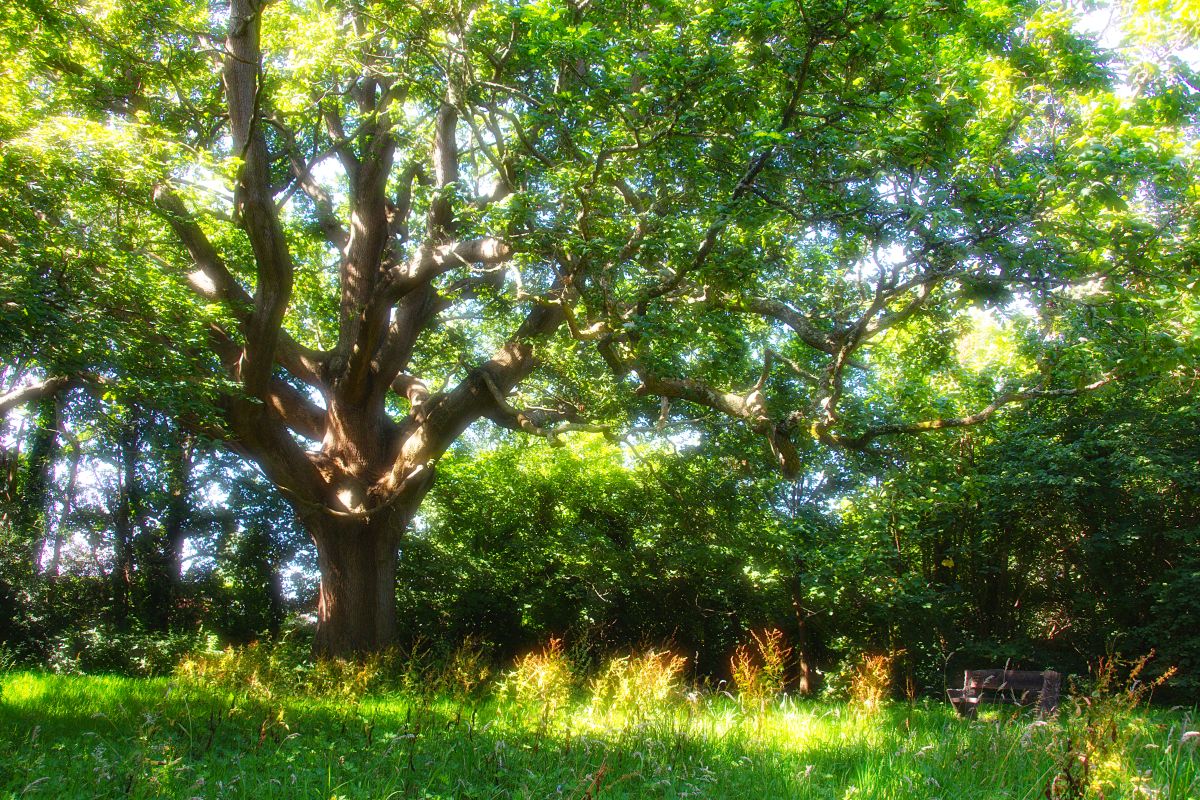
As well as the woodland habitat there are open glades on the south and eastern edges of Park Wood. They are remnants of open fields that were, within living memory, grazed by cattle. In Hampshire unimproved grassland habitats have declined and these glades are locally important habitats providing an opportunity to support a mixture of woodland edge and meadow plants. These species of plants attract pollinating insects such as bees, hoverflies, moths and butterflies, which in turn attract birds and bats that feed on the flying insects. The woodland edge is the most diverse habitats as it provides opportunities for woodland and open ground species.
Not all the wood can be described as ancient. Along the London Road boundary can been seen secondary woodland, this is where trees have recently colonised what was once part of the meadow. The same is true of the other meadow where the secondary trees are less than about 60 years old, which was when grazing stopped. Secondary woodland also covers the area once enclosed as a walled garden - the trees seeding the old walled garden once it fell into disuse after the death of Dr Beddows, the last private owner of the wood who died in 1953. Unlike ancient woodland, secondary woodland will have a less diverse ground flora as it would have shaded out most of the open meadow flowers, and this would favour taller shade tolerant plants like bramble.
Soil conditions will also determine the type of plant life to be found. Park Wood lies on a slight west to east slope. The lower part of the wood is on clay, so the drainage is poor, and this part of the wood stays wet over the winter. Willow and Alder trees thrive in damp or waterlogged soil and they are growing in the wetter parts of the wood. On the higher ground the soil is drier and more acidic as evidenced by Bracken with tree species such as Silver Birch, Beech and Scots Pine doing better here.

Trees
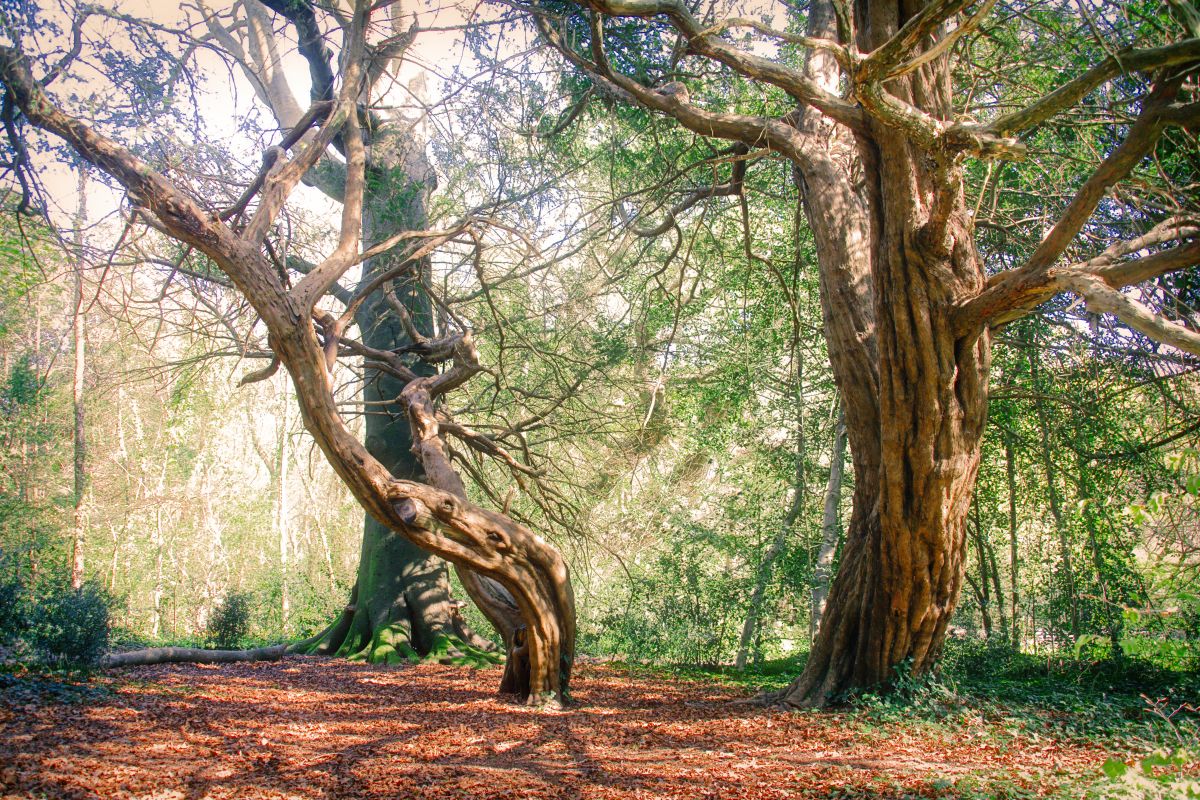
The wood has a rich diversity of tree species including some ‘veteran’ trees. There are two large oaks in the remnant of the meadow by London Road. They are at least 250 years old and given their spread and shape, originally grew in a more open environment. There are also Beech and Yew trees that would fall into the veteran category.
The Yews, which are difficult to age, suggest that Park Wood has had tree cover for hundreds of years. Other tree species found in the Wood include Elm, Poplar, Willow, Hazel, Blackthorn, Holly, Hawthorn, Sycamore, Field Maple, Ash, Elder, Sweet Chestnut, Wild Cherry, Rowan, Scots Pine, Crab Apple and Horse Chestnut. The diversity of tree cover would also suggest that Park Wood has been around for a long time.
Plants
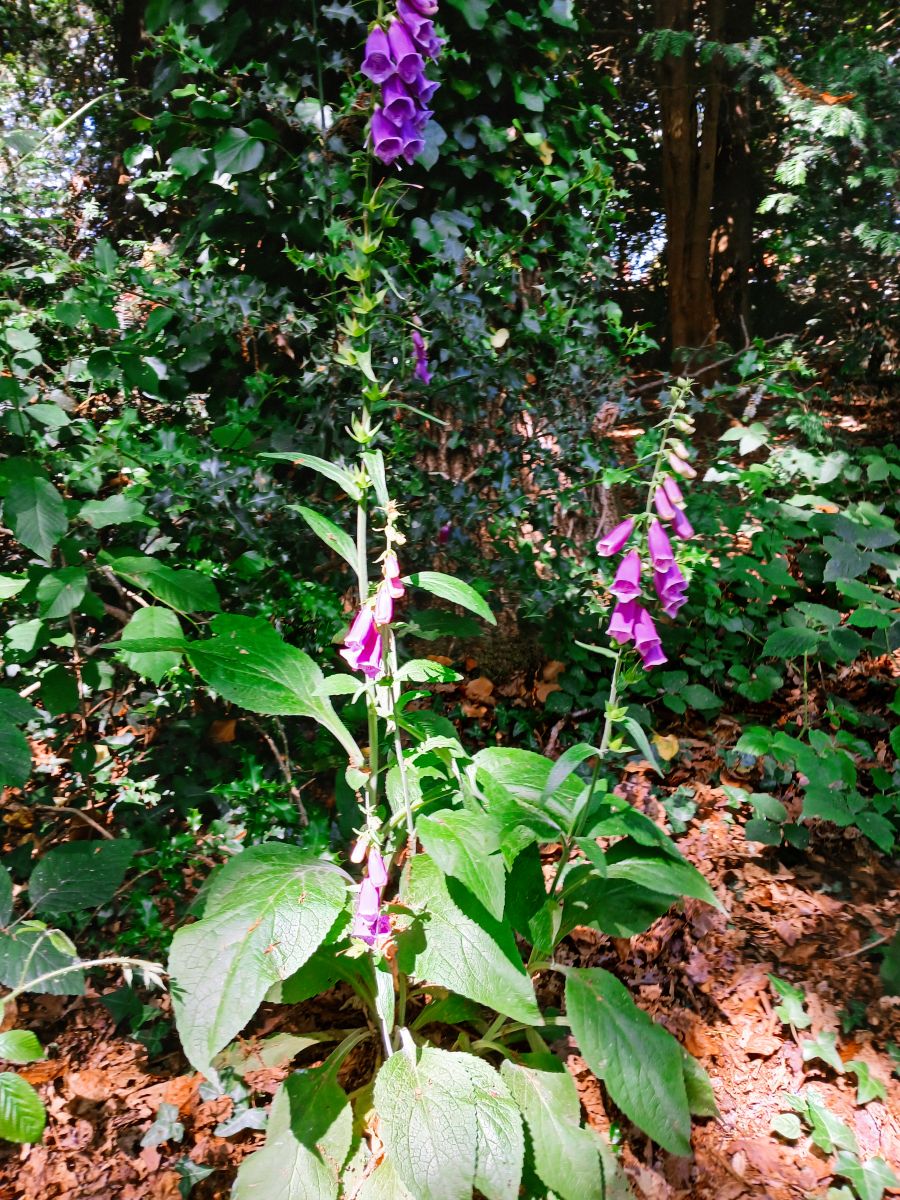
Park Wood is not just about trees. Equally important is the multitude of grasses and wildflowers that grow under the woodland canopy. Woodland plants found in Park Wood at different times of the year include Snowdrops, Celandine, Wood Anemone, Bluebells, Primroses, Wood Spurge, Solomon’s Seal, Wild Arum, Wood Sorrel, Bugle, Common Twayblade, Honeysuckle, Ground Ivy, Yellow Archangel, Wild Garlic (Ransoms), Nettles, Bramble, Bracken and Foxgloves.
Some woodland plants when found in combination are seen as indicators of ancient woodland. One example in abundance in Park Wood is Butcher’s Broom an unusual shrub like plant with green branches that are flatted to look like leaves and red berries that grow directly onto the stems. Butchers Broom prefers undisturbed soil under the woodland canopy. Together with presence of other woodland plants we can say that Park Wood can be classified as ancient woodland. When temporary glades are made by natural events or human intervention, plants whose seeds have laid dormant in the ground will germinate and take advantage of more sunlight reaching the woodland floor. In Park Wood, Foxgloves have appeared in temporary glades created by coppicing.
Eventually as the cut coppice stumps or stools sprout new stems, the plants that colonised the open glades will change to more shade tolerant species, until there is a closed in canopy again. This is called succession, which describes the stages of development of open bare land to eventual high forest.
To conserve the two remnants of old meadow, the grassy areas are cut and raked at the end of summer to replicate grazing. This provides the right conditions for plants such as self-heal, red clover, lady’s smock, and common spotted orchid to continue growing here and keeps Park Wood wildlife habitats as diverse as possible.
Insects
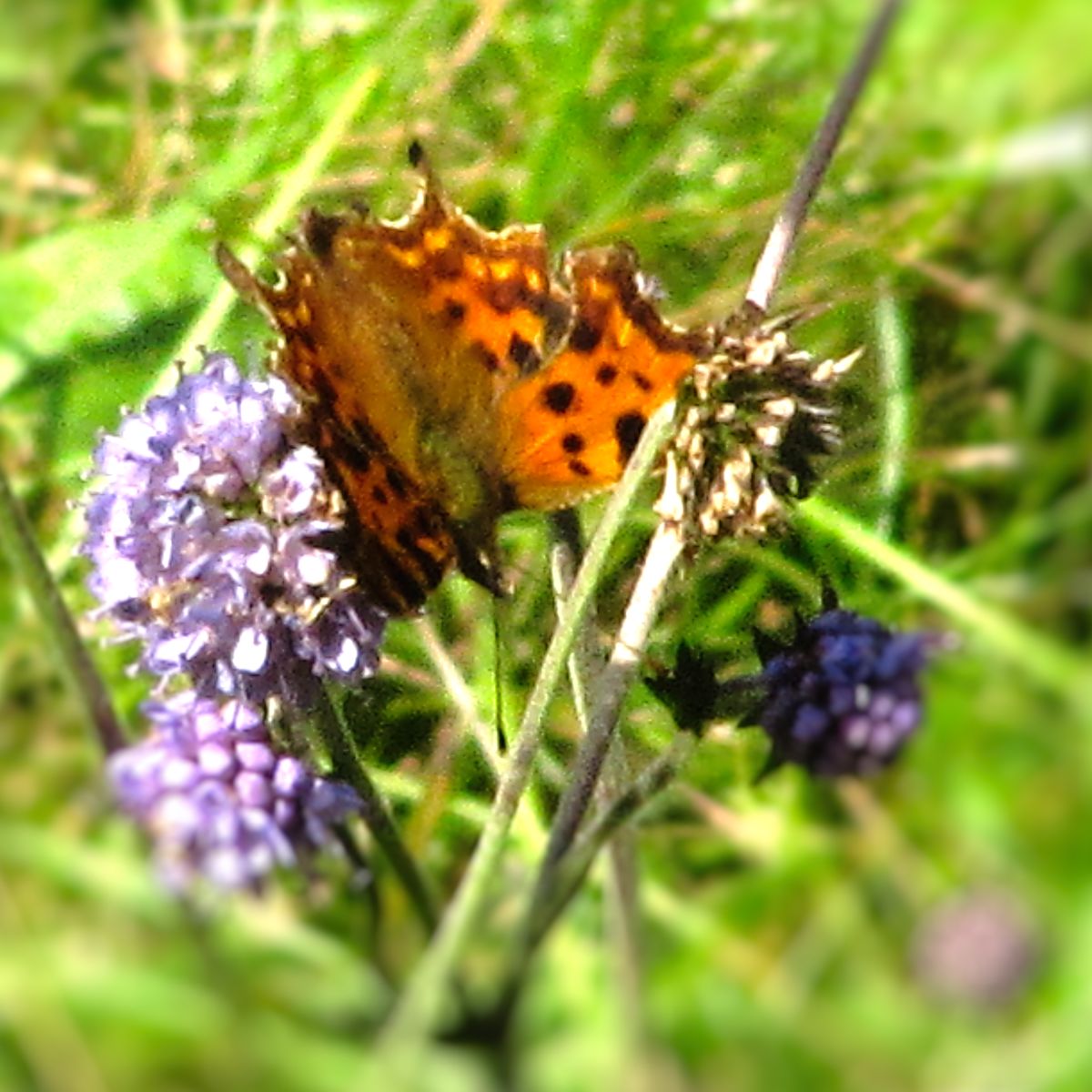
Insects associated with woodland habitats recorded in Park Wood include Stag Beetles, Woodlouse, Shield Bugs, Ground Beetles, Earwigs, Bumble Bees, Hover Flies, Wasps, Bees and Ants, Hazel Weevil, Wolf spiders, Orb Web Spiders, Zebra Spider, Money Spiders, Harvest Men and Garden Spiders.
Butterflies and moths can be seen in the glades inside the wood as well as the grassy areas along the edge of the wood. These can include Butterflies such as the Speckled Wood, Gatekeeper, Meadow Brown, Brimstone, Orange Tip, Large White, Small Copper, Comma, Peacock, Common Blue, White Admiral, and moths such as the Five Spot Burnet, Cinnabar Moth, Elephant Hawk Moth, Puss Moth and Buff Tip Moth.
Birds
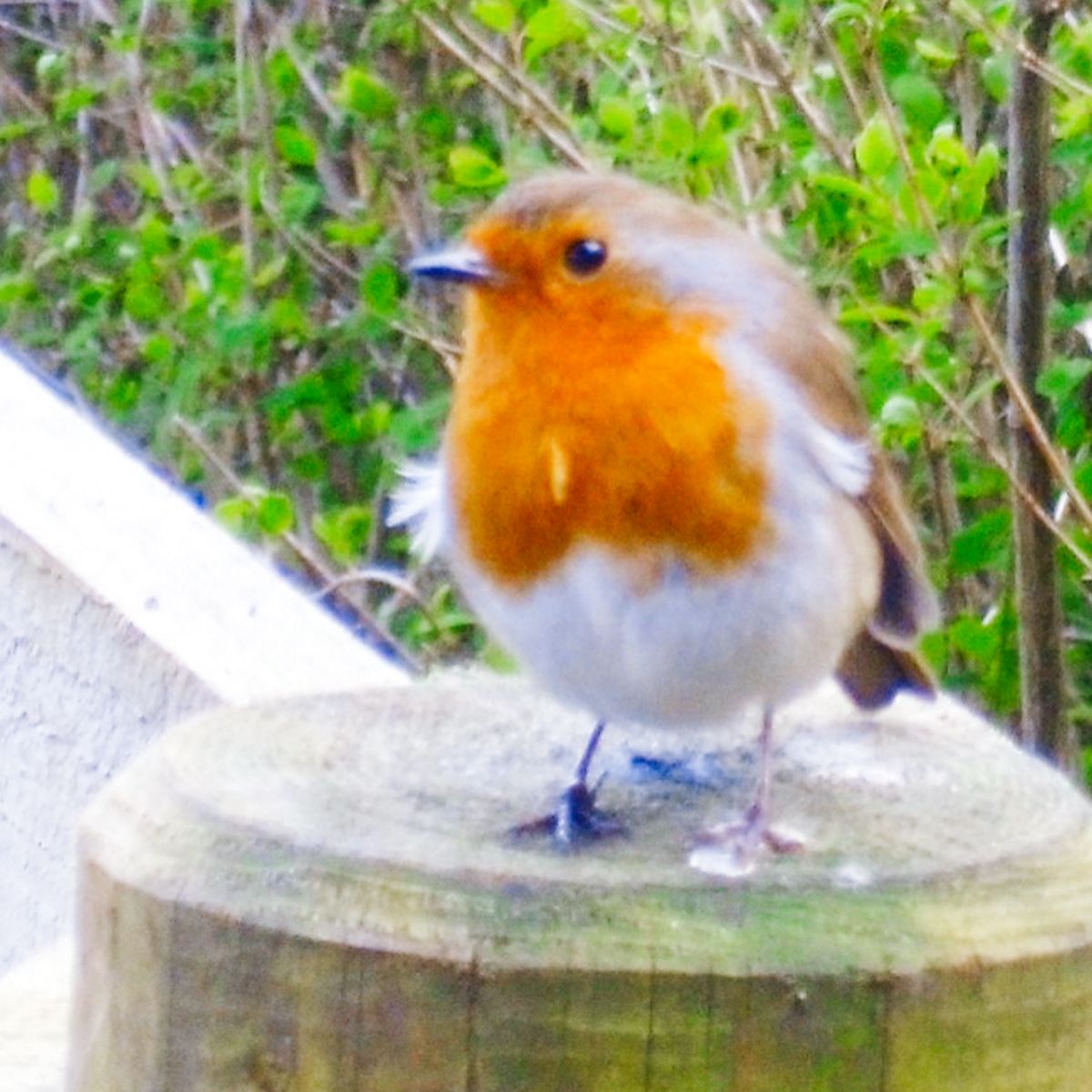
An abundance of insect life as well as seed sources will also attract bird species. Given its location, surrounded by housing and with the expanse of Queen’s Inclosure just opposite as well as wider countryside within about a mile of the wood, species seen in and around Park Wood are a mixture of urban, garden and woodland birds.
Species seen in, flying over or heard in the wood include Robins, Wrens, Blue Tits, Blackbirds, Tawny Owl, Magpie, Wood Pigeon, Collar Dove, Green Woodpecker, Chiffchaff, Thrush, Nuthatch, Treecreeper, Jay, Greenfinch, Goldfinch, Sparrow, Sparrowhawk and Buzzard.
Reptiles
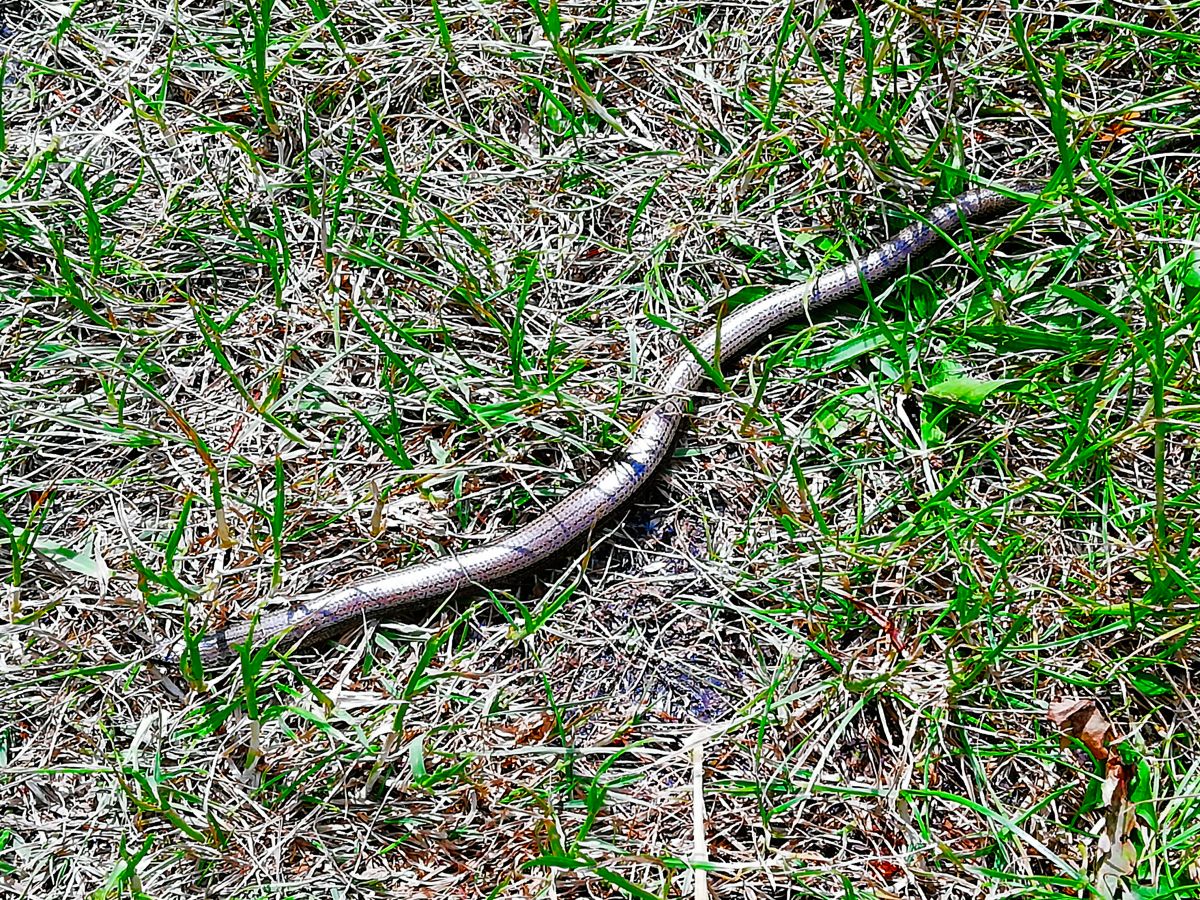
The damp conditions are ideal for amphibians like Frogs and Toads and lying timber piles provide important cover for overwintering Newts. In drier parts of the wood especially where there are old bricks from the former walled garden or log piles Common Lizards might be found.
The composting grass cuttings obtain from mowing the meadows provide a home for Smooth Snakes (a legless lizard not a snake!). Grass snakes are also known to like the sort of habitats we have in Park Wood although, as yet, none have been recorded.
Mammals
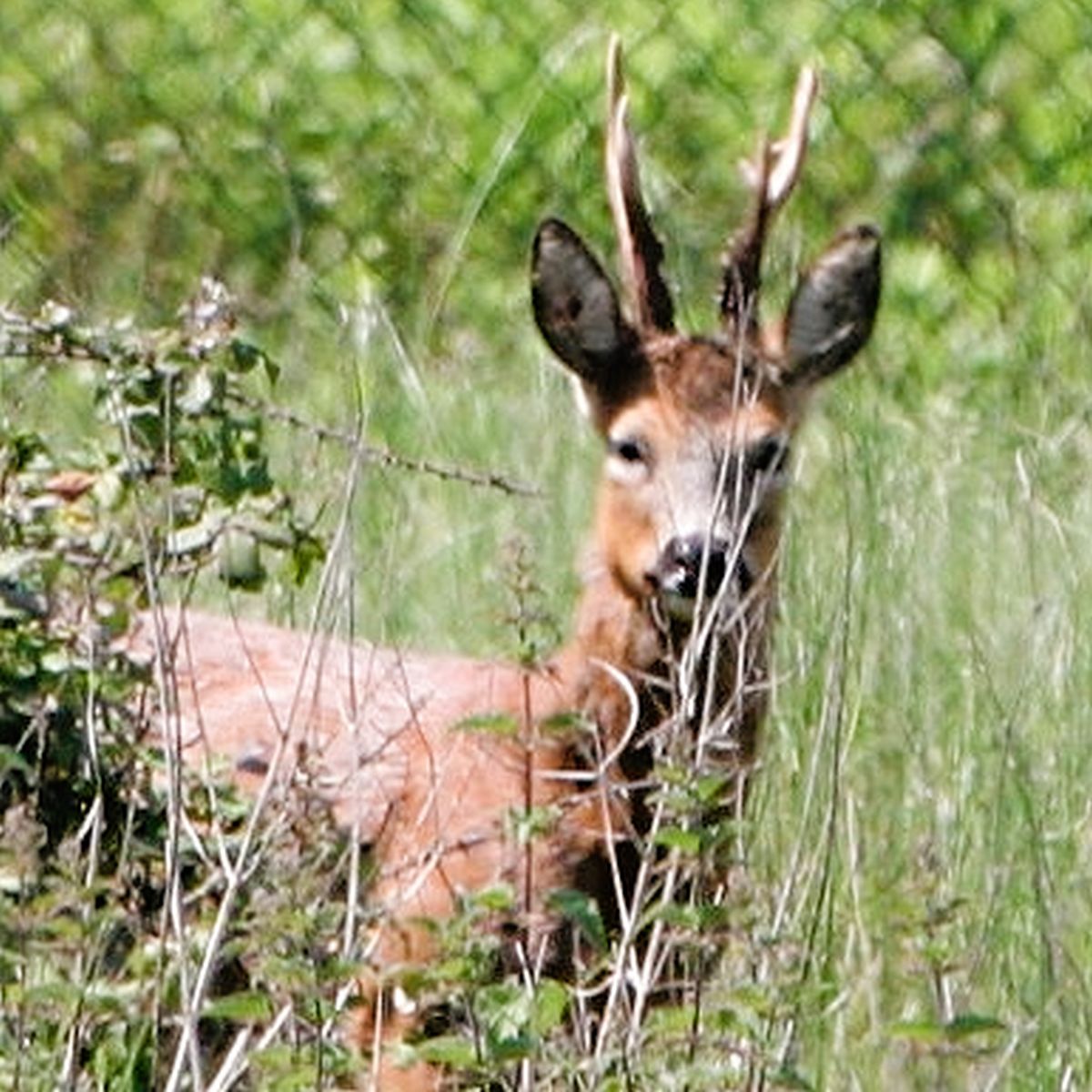
In the wood we have a number of small mammals such as shrews, wood mice and voles. There have been sightings of larger mammals, occasionally a Roe Deer has been known to hide up in Park Wood and also solitary Badgers have made use of it as have Foxes which use it for cover while foraging the surrounding area for food. Pipistrelle Bats can be seen at dusk flying around the edge of the wood in search of insects.
However, the most obvious mammals in the wood are Grey Squirrels - originally introduced from America, they have pushed out our smaller native Red Squirrels over most of England. Although popular with people in towns, Grey Squirrels can damage our trees and around the wood there is plenty evidence of Squirrel damage.
Detritivores
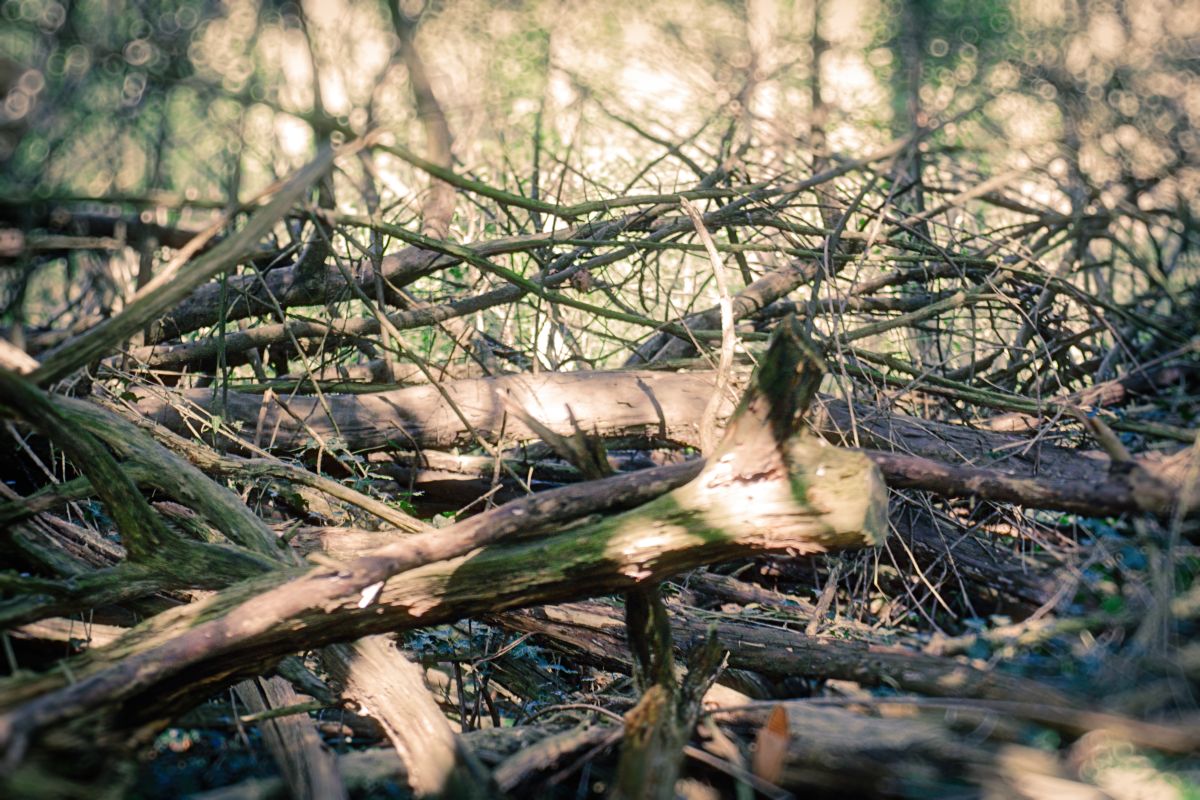
When trees have had to be felled or cut, timber has been left either to decay on the ground in habitat piles or as standing dead wood. Rotting wood provides habitat for insects be it beetles, solitary bees, worms, earwigs, woodlice as well as for fungi, some small and almost unnoticeable such as Coral Spot Fungus or fungi with larger obvious fruiting bodies such as Chicken of the Woods, Honey Fungus, Fly Agaric.
Detritivores break down the cellular structure of dead wood eventually converting it to soil and therefore having a crucial role in woodland ecosystems.
Conservation of woodlands
As mentioned earlier, nearly all our native woodland is best described as semi-natural in so far as humans have been managing woods since at least the iron age. With the introduction in more recent history of exotic garden species from around the world there is the possibility of non-native species taking root in our native woodlands and out competing our slower growing native trees. In the case of Park Wood by 2000 it had become overgrown and heavily shaded.
Laurel and bamboo, exotic garden species that had once been grown in the walled garden or planted in the gardens of adjacent houses had become established throughout the wood. In addition, the great storm of 1987 and later ones had brought down several trees. The meadows were in danger of disappearing as grazing had stopped. Today after numerous hours of work by volunteers the woodland is a thriving habitat.
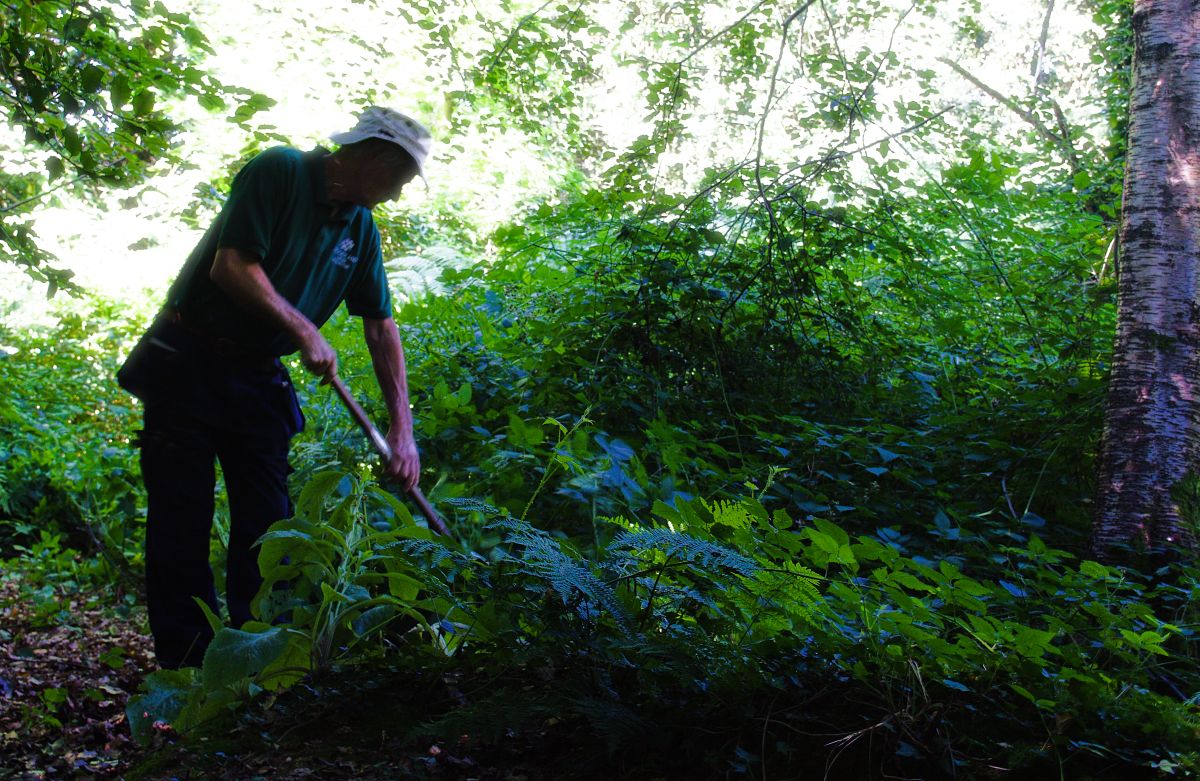
Volunteers from the Friends of Park Wood hold regular work parties to remove unwanted non-native species, cutting and raking the glades to retain the right conditions for the wildflowers and grasses associated with meadow habitats. There are also opportunities to warden the wood to reduce the impact of human activities on the woodland ecology as well as record the wildlife of the site.
In conclusion Park Wood, although small, provides a locally valuable natural greenspace that benefits wildlife and the local community.